
Tintype
Also known as: Collodion positive, Ferrotype, Melainotype
Period: 1850–1890 / 1890–1930 Tags: Glossary / Photography processes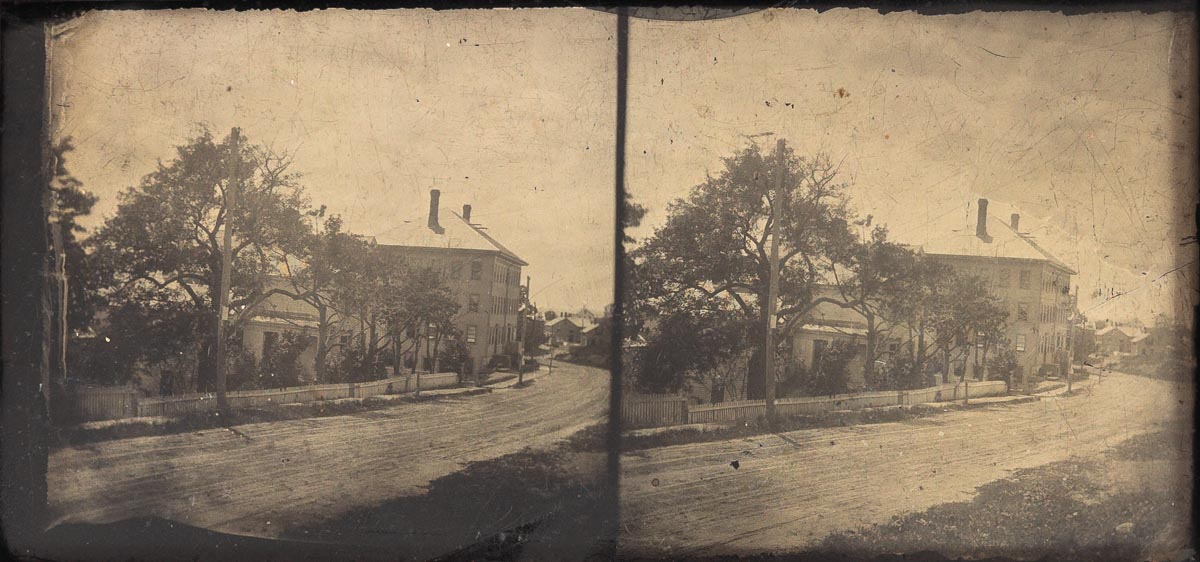
© Stereoscopy History
A tintype is a direct positive photographic process in which the image is formed on a sheet of iron (not tin) coated with a dark lacquer or enamel. Despite the name, no tin is involved.
The tintype is based on the collodion process. A collodion emulsion containing light-sensitive silver salts is applied to the metal plate, which is then exposed and developed while still wet. The resulting image is technically a negative, but because it is viewed against the dark metal support, it appears as a positive.
Tintypes were inexpensive, durable, and quick to produce, making them popular for portrait photography from the 1860s onward. Unlike daguerreotypes and ambrotypes, tintypes did not require protective glass or cases, which contributed to their widespread commercial use.
The tintype process was rarely used in stereo photography, and tintype stereoviews are uncommon.
Related items:Ambrotype Daguerreotype Direct positive Negative Positive Wet plate collodion
Process summary: