
Ambrotype
Also known as: Amphitype, Collodion positive
Period: 1850–1890 Tags: Glossary / Photography processes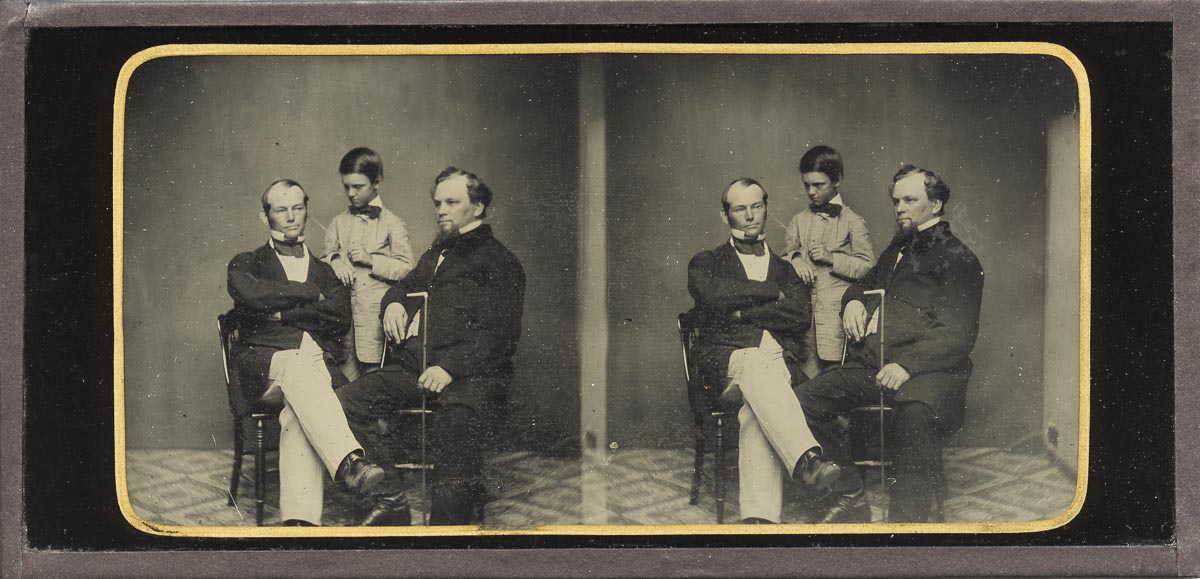
© Stereoscopy History
Ambrotype is a photographic process that produces a direct positive image on glass. The process is directly related to the wet plate collodion process. It uses a glass plate coated with collodion containing light-sensitive silver salts. After exposure in the camera, the plate is developed to form a negative image. Unlike a standard collodion negative, the ambrotype is intentionally underexposed.
When this negative is backed with a dark material, such as black varnish, or paint, the image appears as a positive. The silver particles appear light against the dark background, creating the illusion of a positive photograph. Without the dark backing, the image would be seen as a negative.
Stereo ambrotypes were typically housed in protective cases or viewing cases with stereo lenses, similar to daguerreotypes. The process was popularised by James Ambrose Cutting from the United States, after whom the process was named.
Related items:Daguerreotype Negative Positive Viewing case Wet plate collodion
Process summary: