
Daguerreotype
Period: 1850–1890 Tags: Glossary / Photography processes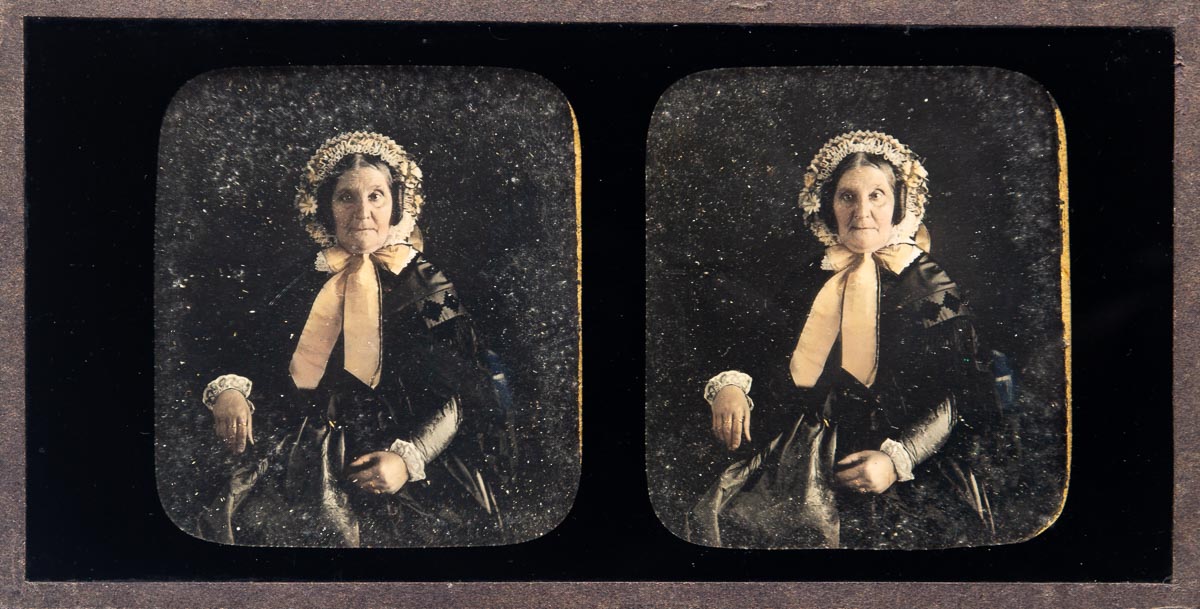
© Stereoscopy History
The daguerreotype process was the first commercially successful photographic process and was introduced in 1839 by Louis Daguerre. The process produced a direct positive image on a polished silver-plated copper sheet. The announcement of the process marked the practical beginning of photography and led to its rapid international adoption during the 1840s.
Daguerreotypes were created by sensitising a silver surface with iodine vapour to form light-sensitive silver iodide. After exposure in the camera, the image was developed using mercury vapour and fixed with a salt or sodium thiosulfate solution. The result was a highly detailed, mirror-like image with exceptional sharpness but no negative, meaning each daguerreotype is a unique object.
The process became particularly well suited to portrait photography. Improvements in lens design and chemical sensitisation reduced exposure times, making studio portraits practical. Daguerreotypes were often housed in protective cases, both to prevent physical damage and to reduce reflections. Hand-colouring was commonly applied to add lifelike tones to faces, clothing, and jewellery.
Despite its visual quality, the daguerreotype had limitations. Images were fragile, difficult to view due to reflections, and could not be reproduced. From the early 1850s onward, it was gradually displaced by the wet collodion process, which allowed multiple prints.
Daguerreotypes played an important role in early stereoscopy. Stereoscopic daguerreotypes were produced soon after the introduction of the Brewster-type stereoscope. Their reflective surfaces influenced the development of enclosed stereoscope designs intended to shield the images from ambient light. Special folding viewing cases equipped with stereo lenses were also produced In England and the United States to enable viewing while protecting the daguerreotype.
Related items:Brewster-type stereoscope Colouring Direct positive Viewing case Wet plate collodion
Process summary: