
Tray-based stereoscope
Period: 1890–1930 Tag: Glossary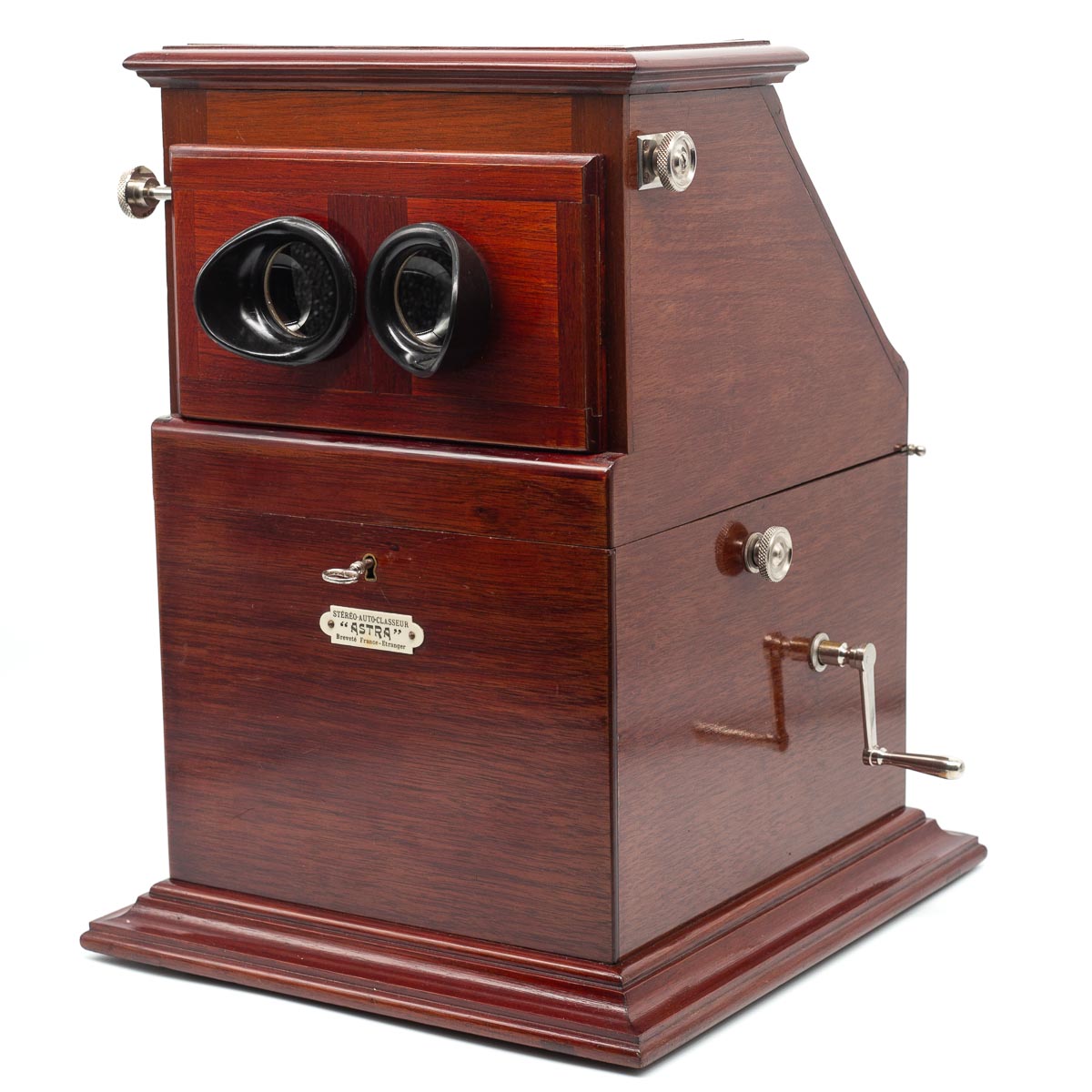
© Stereoscopy History
A tray-based stereoscope is a multi-view stereoscope for glass stereoviews. It uses slide trays to present images sequentially.
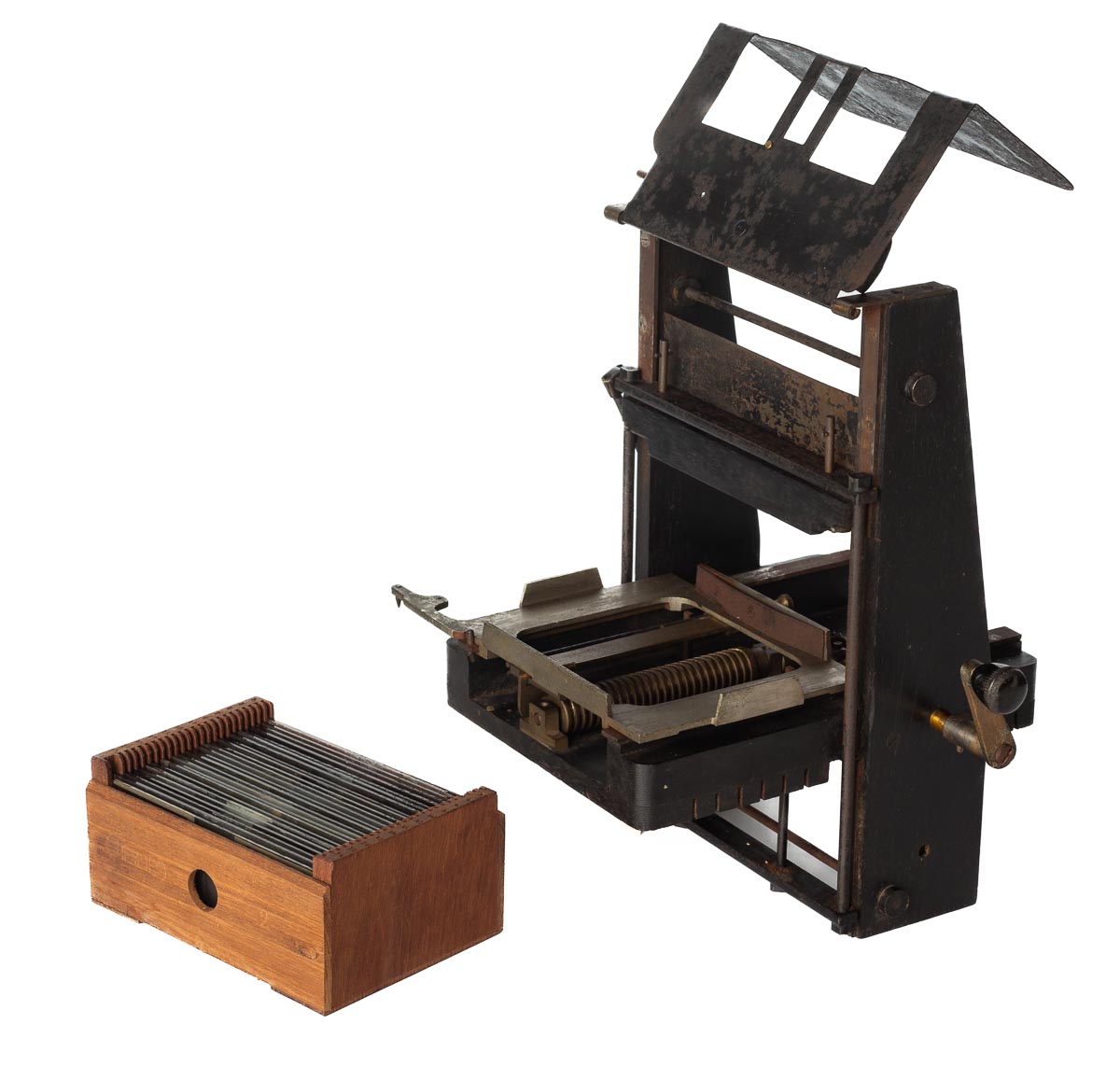
Glass slides are arranged in a wooden or bakelite tray that is placed into the device. During operation, a slide is lifted from the tray and positioned in front of the lenses. After viewing, the slide is returned to the tray, the tray is advanced along a rail, and the next slide is brought into position. Tray-based stereoscopes represent the most advanced category of stereoscopes and provide a high level of viewing comfort.
The first tray-based stereoscope was the Taxiphote, introduced in 1900 by Jules Richard.
Related items:Multi-view stereoscope Slide tray Taxiphote
© Stereoscopy History
Published: 04-02-2026 Last modified: 10-04-2026