
Gelatin silver print
Period: 1890–1930 Tags: Glossary / Photography processes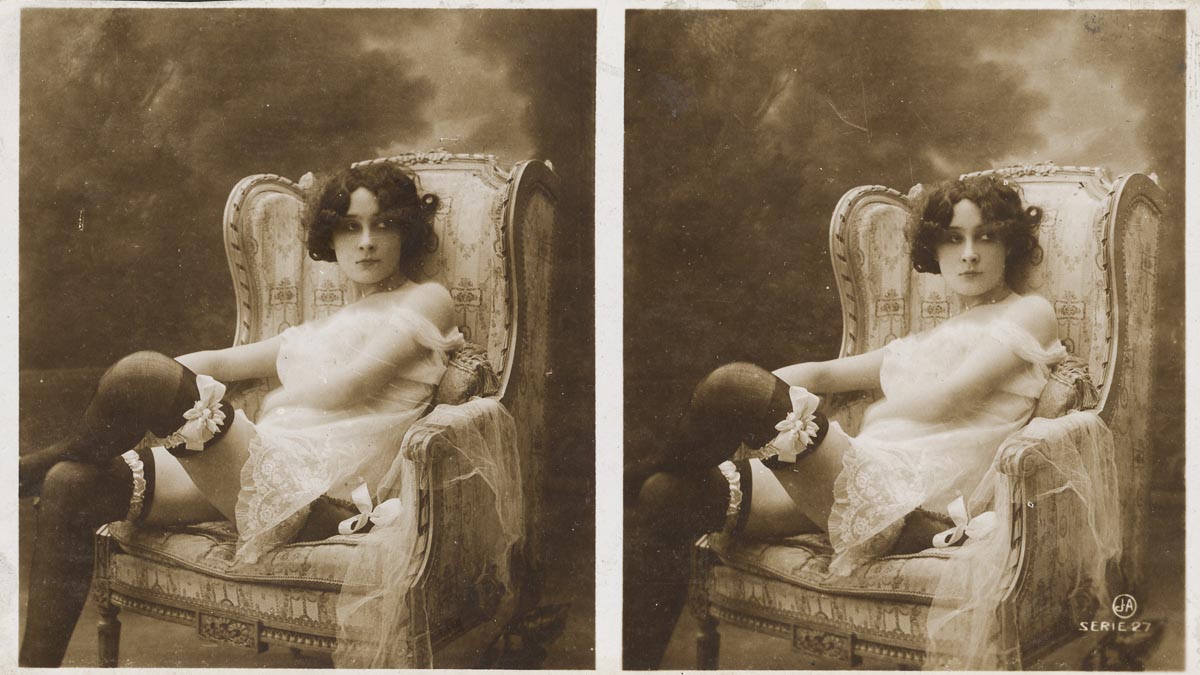
© Stereoscopy History
Gelatin silver is a positive printing process in which paper, glass or film is coated with a gelatin silver emulsion. Prints are produced by exposing the paper under a gelatin silver negative and chemically developing the image. Compared with albumen prints, gelatin silver prints offered greater stability, a wider tonal range, and a matte or semi-gloss surface. They gradually replaced albumen paper from the late 19th century onward.
In stereo photography, gelatin silver paper and glass prints became common in the late 19th and early 20th centuries, particularly for amateur stereoviews and later commercial production. The combination of gelatin silver glass negatives and gelatin silver paper prints formed the standard photographic workflow well into the 20th century.
Related items:Albumen print Gelatin silver negative Negative Positive
Process summary: