
Omnicolore
Period: 1890–1930 Tags: Glossary / Photography processes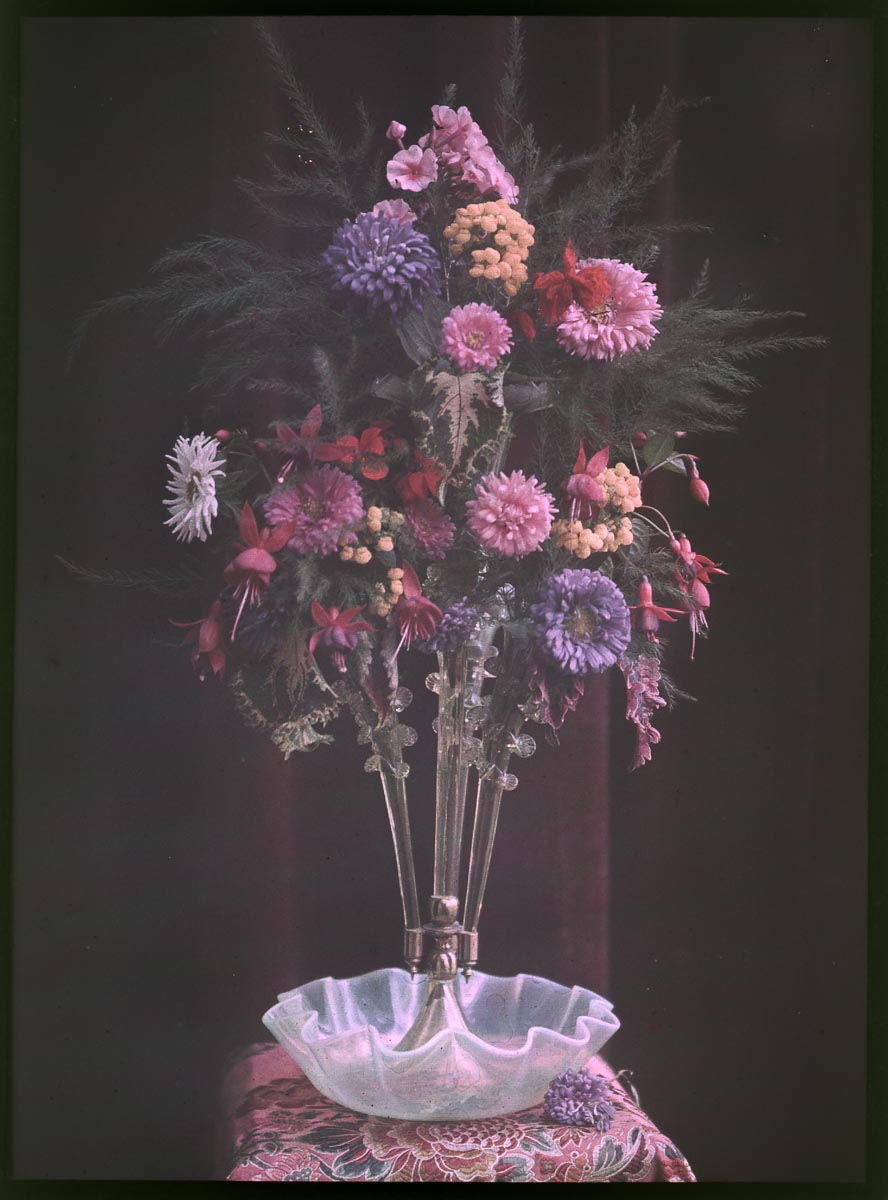
© Stereoscopy History
Omnicolore was a colour photographic process based on an invention by Louis Ducos du Hauron and industrialised by Jougla. It was introduced in 1907, the same year as Lumière’s Autochrome.
Both Autochrome and Omnicolore were based on the principle of additive colour using a screen process. Whereas Autochrome employed dyed starch grains to form the colour filter screen, Omnicolore utilised a regular pattern of printed ink lines and square dots. Omnicolore plates exhibited higher light sensitivity than Autochrome and therefore required shorter exposure times. This increased sensitivity was associated with a less precise colour filter screen, resulting in lower colour fidelity compared with Autochrome. The plates were produced in various formats, including the 45 x 107 and 6 x 13 stereo formats.
In 1911, Jougla merged with Lumière to form the Union Photographique Industrielle. The merged company marketed its products under the name Lumière & Jougla. The merger also led to the discontinuation of Omnicolore. Maintaining two additive colour processes was not economically viable within the limited market for colour photography. Autochrome was retained as the preferred process, and Omnicolore was withdrawn from the market in 1912.
Related items:Additive colour Autochrome Screen process
Process summary: