
Holmes-Bates stereoscope
Region: United States Period: 1850–1890 / 1890–1930 Tag: Glossary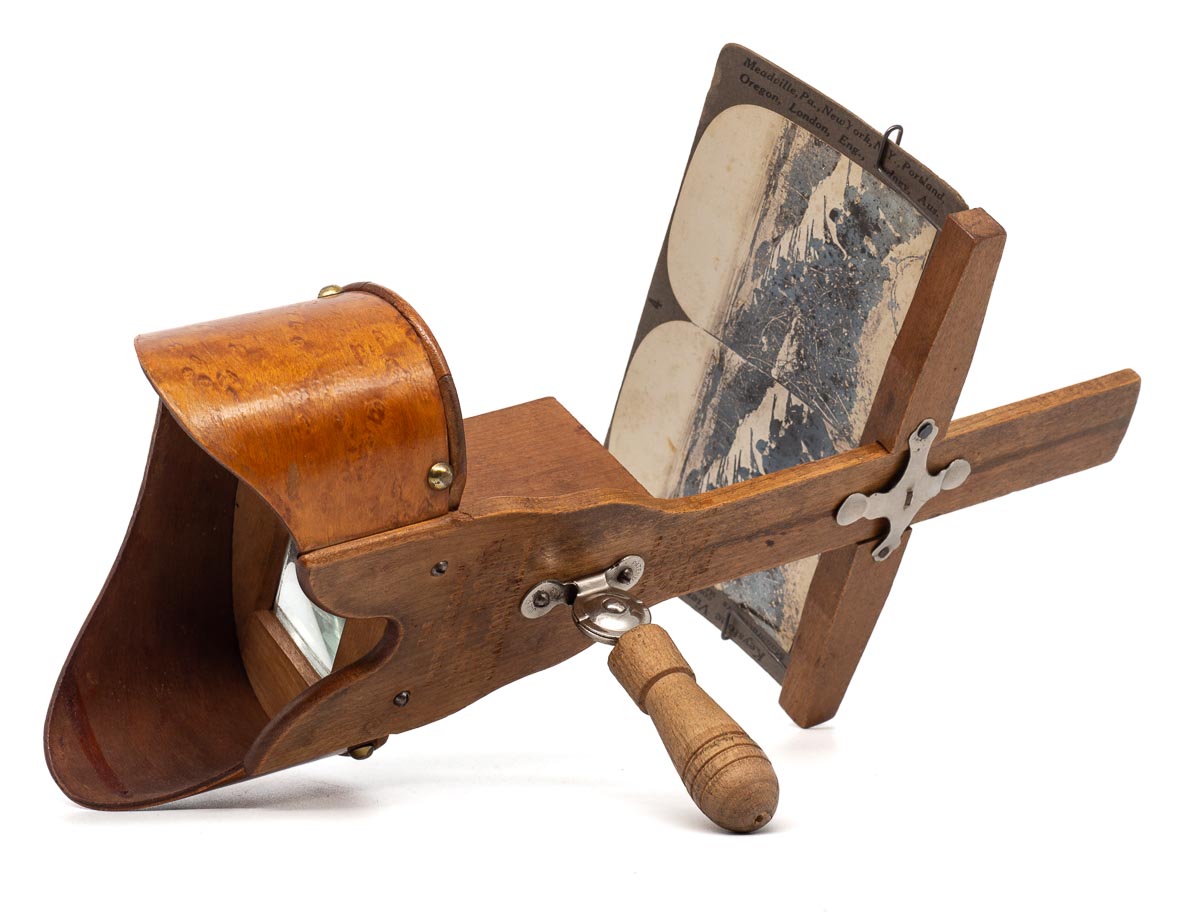
This model is a Perfecscope, manufactured by H. C. White.
© Stereoscopy History
The Holmes-Bates stereoscope is a hand-held viewer for paper stereoviews. The viewer is characterised by a simple, open-frame construction and a sliding card holder. The design typically consists of a wooden handle, a horizontal rail for positioning the stereoview, and a fixed lens board with lenses. The open structure allows ambient light to illuminate the stereoview, making the device lightweight, inexpensive, and easy to use.
The stereoscope is named after Oliver Wendell Holmes Sr., who designed the basic form in the early 1860s, and Joseph L. Bates, who later refined the design. Holmes deliberately did not patent his stereoscope, intending it to be freely adopted and widely produced.
Holmes–Bates stereoscopes became the most common stereoscope type in the United States. Their simplicity, low cost, and compatibility with standard paper stereoviews contributed to their widespread popularity. It is the most widely produced stereoscope in history.
Related items:Bates, Joseph L. Hand-held stereoscope Holmes, Oliver Wendell Sr.