
Art Nouveau
Also known as: Jugendstil
Region: France / Germany Period: 1890–1930 Tag: Glossary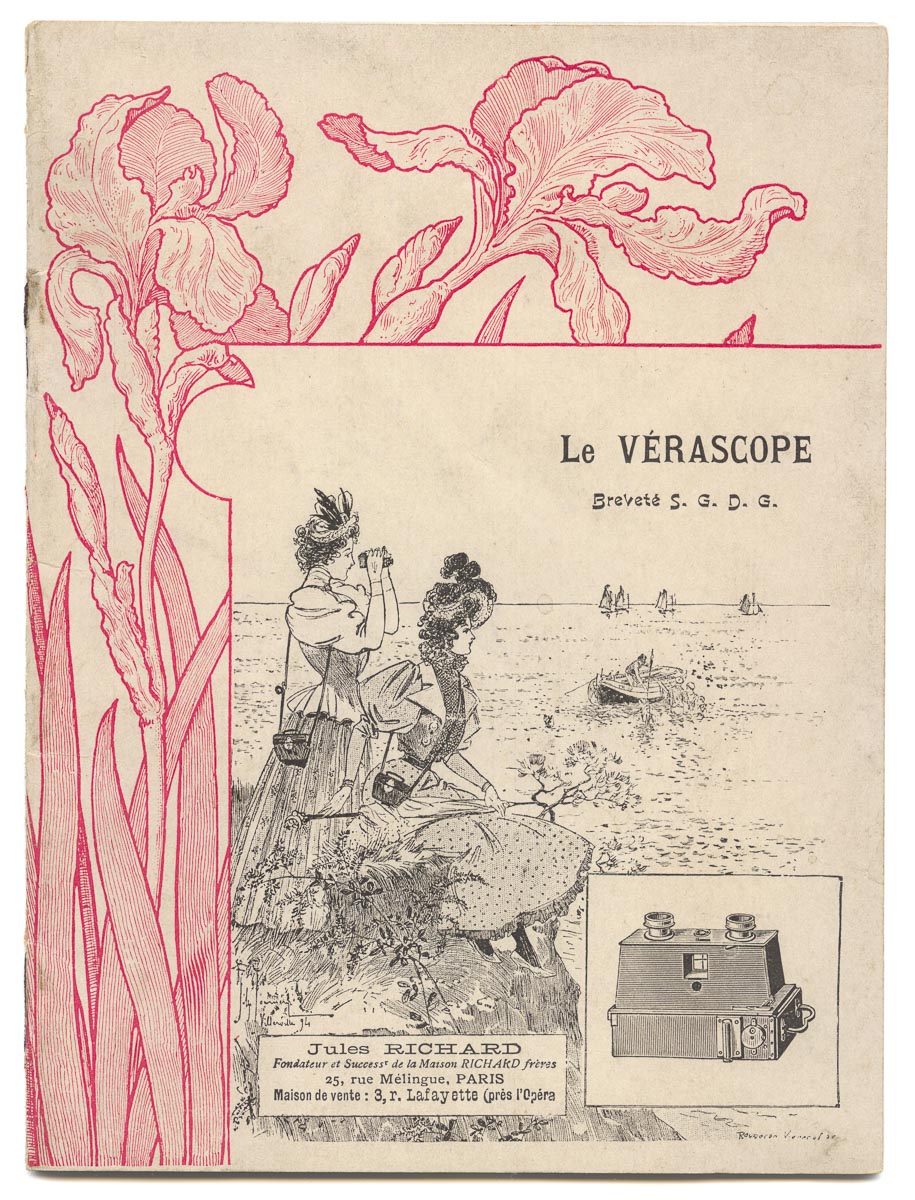
© Stereoscopy History
Art Nouveau, known as Jugendstil in Germany, is a decorative and artistic movement that developed in Europe around 1890–1910. It is characterised by flowing, organic forms, asymmetrical compositions, and the frequent use of stylised natural motifs such as plants, flowers, and curving lines. The style was applied across a wide range of disciplines, including architecture, furniture, and graphic design.
The style was not commonly applied to the design of stereoscopes, however, Art Nouveau and Jugendstil did appear in the visual identity of manufacturers, particularly in France and Germany. It is most often encountered in logos, catalogues, and advertisements, where the characteristic ornamental line work and typography were used to convey modernity and artistic refinement.

© Stereoscopy History