
Phénix
Region: France Period: 1890–1930 Tag: Bize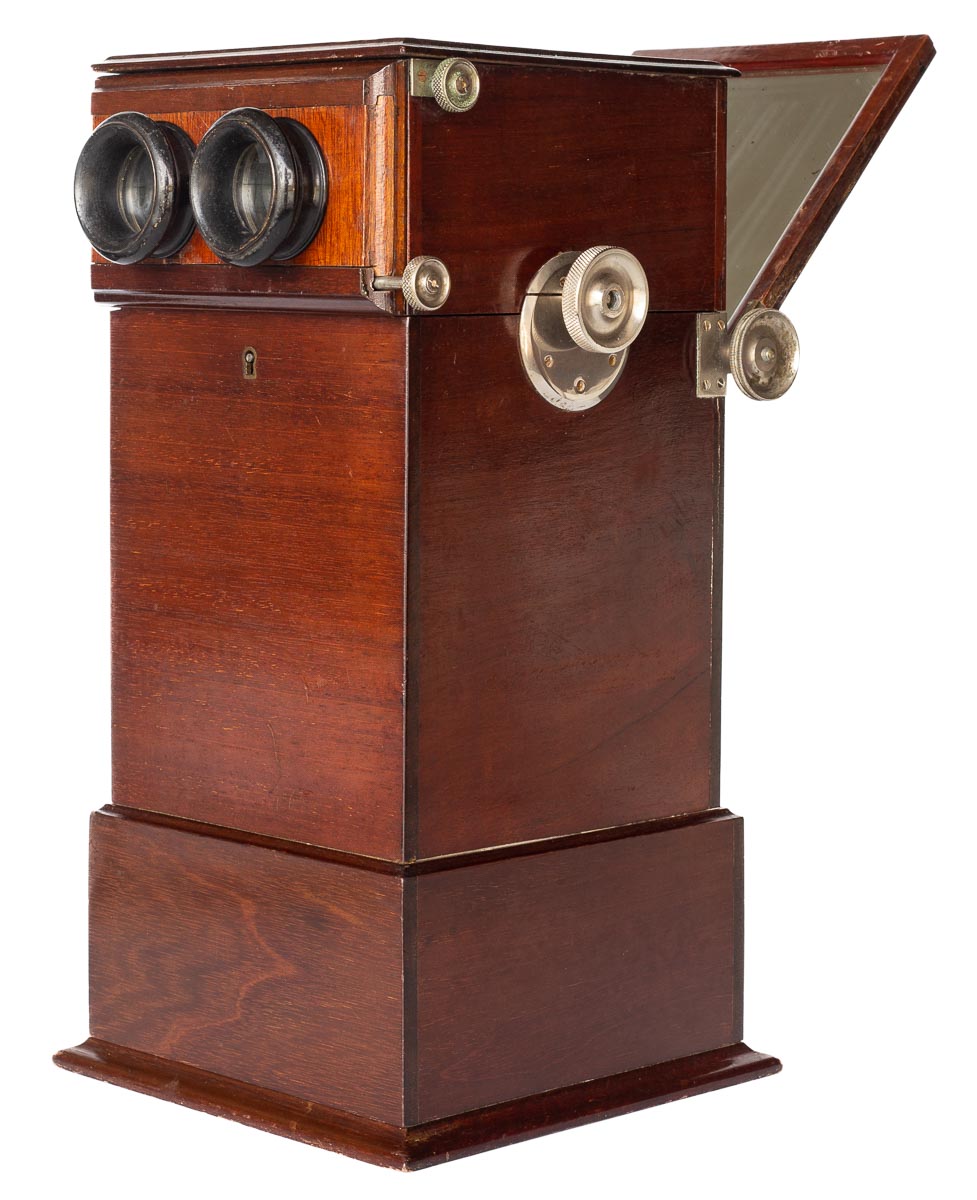
© Stereoscopy History
Le Phénix is probably the relatively most compact stereoscope ever designed. The viewer accommodates a belt carrying an unusually large number of 48 glass stereoviews. A later model was introduced with a capacity of 60 slides.
Operation:
The belt with stereoview holders can be removed from the wooden housing. It is suspended over a metal rod. One of the rod’s rotary knobs can be unscrewed, allowing the rod to be withdrawn from the viewer. This enables the belt with its holders to be replaced by another belt containing new images. Once a belt is installed, the images can be viewed by turning the knobs, which transport the belt through the viewing position.
Specifications:
Classification:
Tabletop / Multi-view / Chain-based
Introduction:
1907
Designer:
Lucien Bize
Maker:
Lucien Bize
Construction:
Wood
System:
Closed
Medium:
Glass
Models for the formats:
45 x 107 and 6 x 13
Number of slides:
Models for 48 and 60
Bidirectional navigation:
Yes
Lens:
Convex
Lens focus:
Yes
Inter-ocular adjustment:
Yes
Other features:
A tiltable holder fitted with a mirror allows the regulation of incident light.
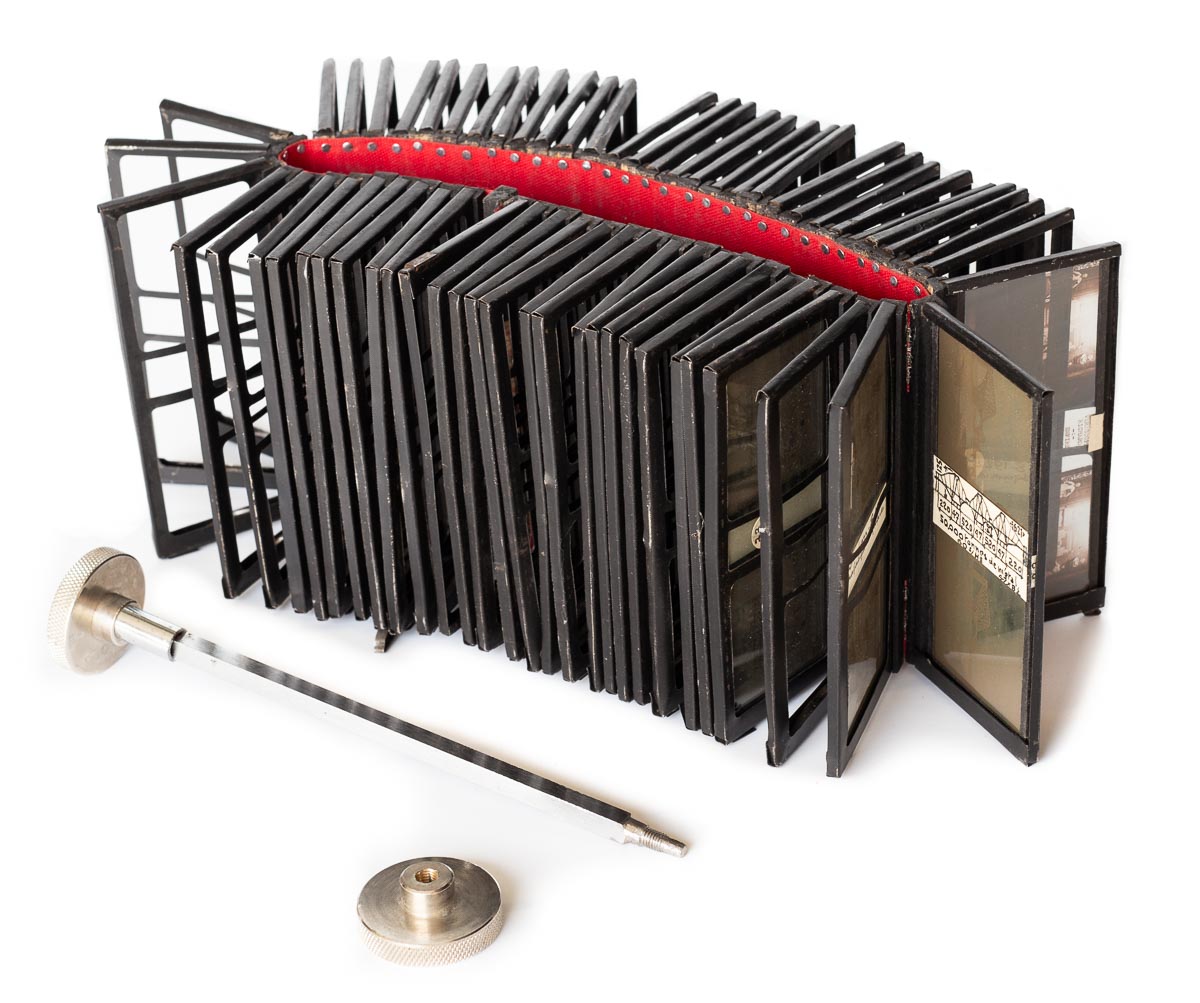
The belt with slide holders removed from the device.
© Stereoscopy History
Published: 21-02-2026 Last modified: 18-03-2026