
Cooke patent
Region: United Kingdom Period: 1850–1890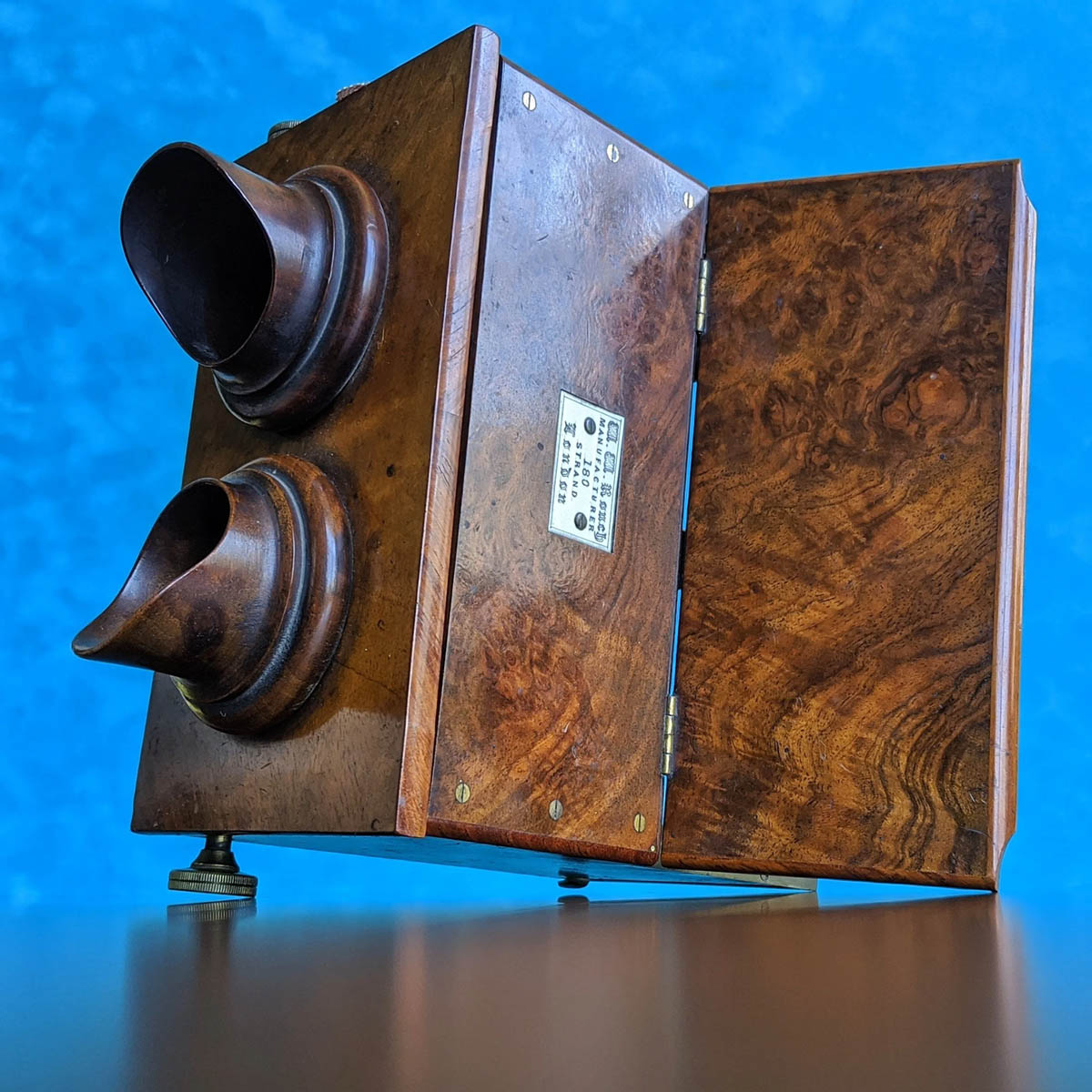
© Vintage 3D Viewer collection
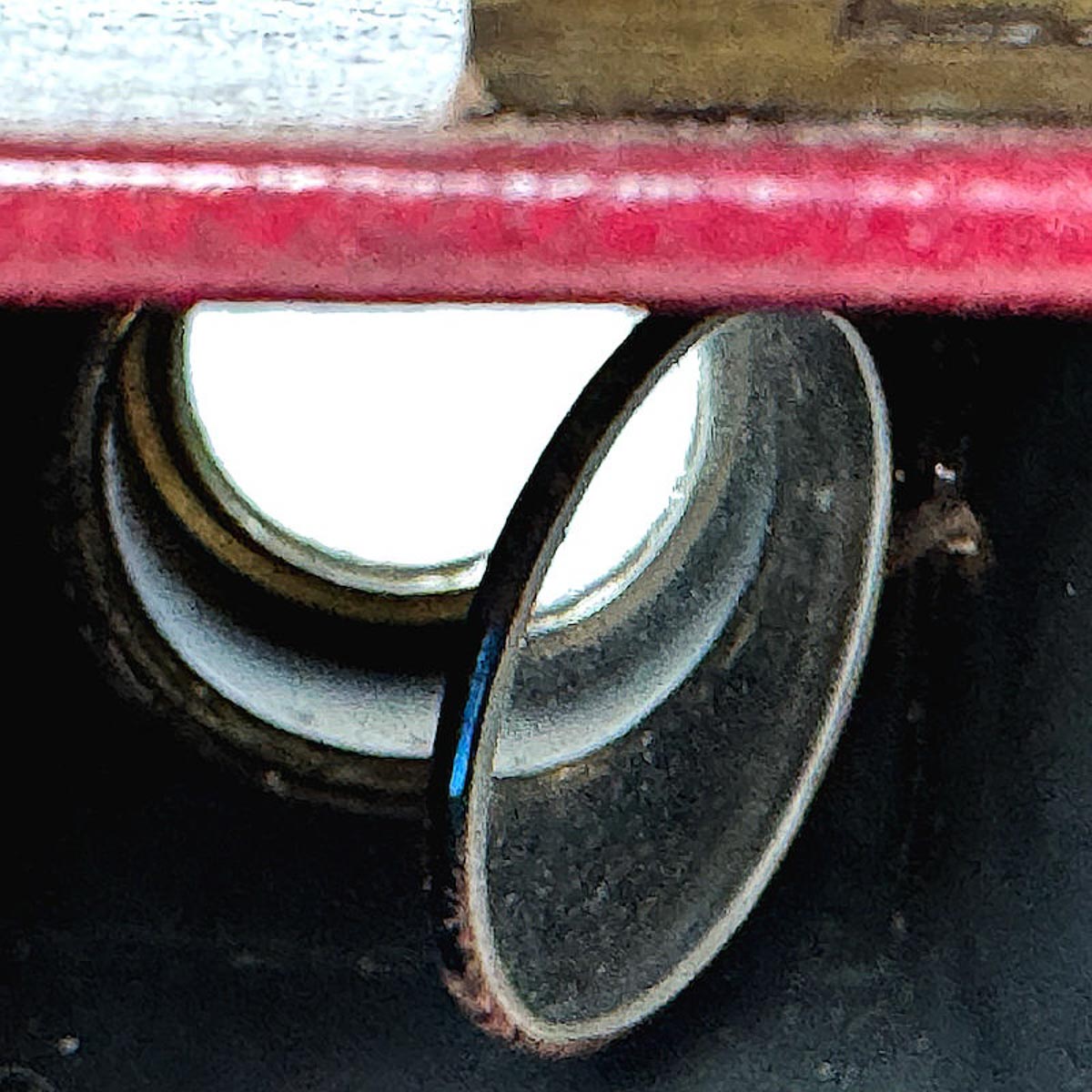
George Cooke’s 1856 patent contained four design features. The use of trumpet-shaped oculars and a black frame placed for the stereoview to block oblique incoming light. An additional slot in the centre of the body allows the stereoview to be positioned closer to the lenses. In combination with auxiliary magnifiers placed in front of the lenses, this makes greater magnification possible. Finally, supplementary lenses in hinged mounts can be rotated into position behind the primary lenses to compensate for near- or far-sighted users or for viewing with colour filters.
Cooke’s patent was implemented in whole or in part in various stereoscopes. Negretti & Zambra’s Magic Stereoscope is the only known viewer in which all four features were applied.
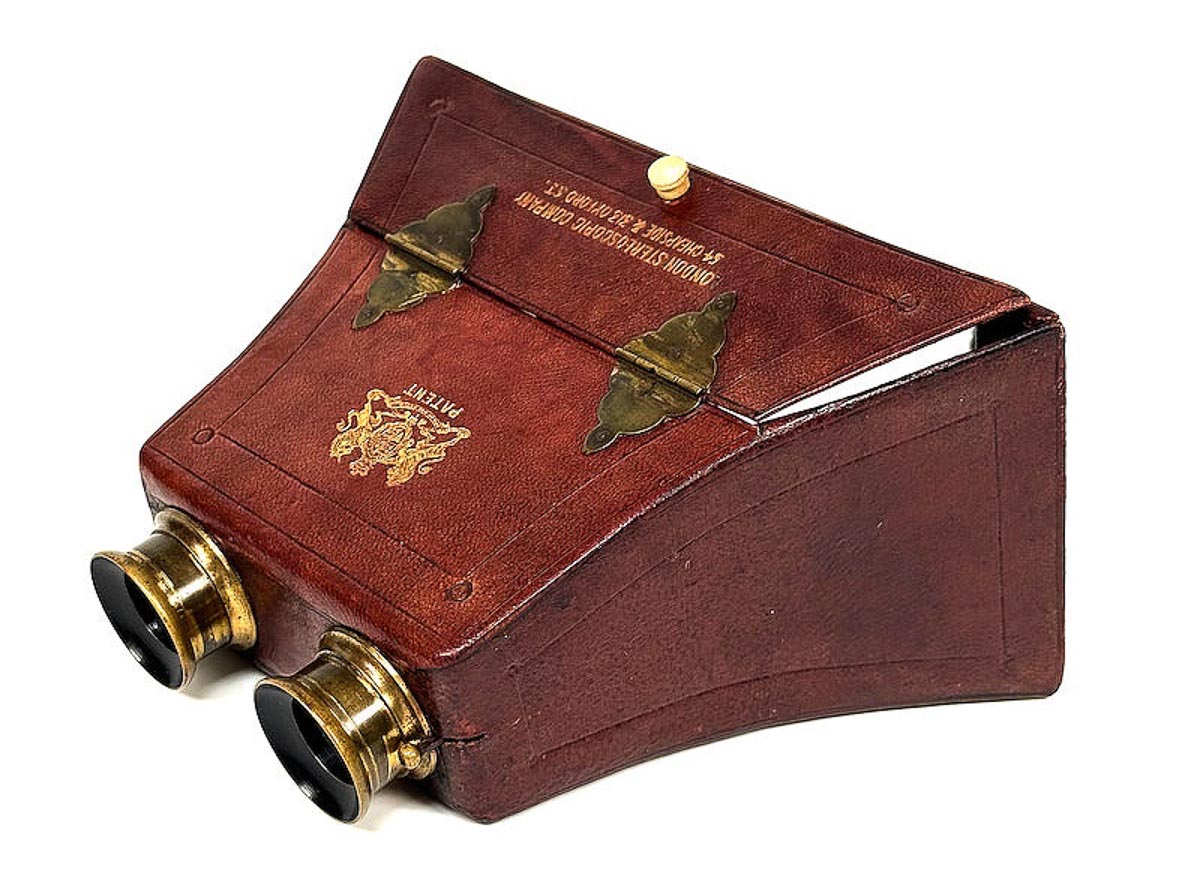
Related items: London Stereoscopic Company Magic stereoscopeSpecifications:
Patents and registrations:
Number: 1782
Improvements in stereoscopes
Filing: 26-07-1856, Applicant(s): George Colleton Cooke
Further reading:
- Wing, Paul. Stereoscopes: The first one hundred years (1996) , pp. 27-29
© Virtual Stereoscopic Museum
© Virtual Stereoscopic Museum